Returning to Blox Fruits: Recheck Your Account and the Current World Before Following an Old Route
A returning player needs a small reorientation session, not an immediate attempt to resume every old plan. Confirm the current account, usable kit, objective and world information before spending, traveling far or replacing familiar equipment.
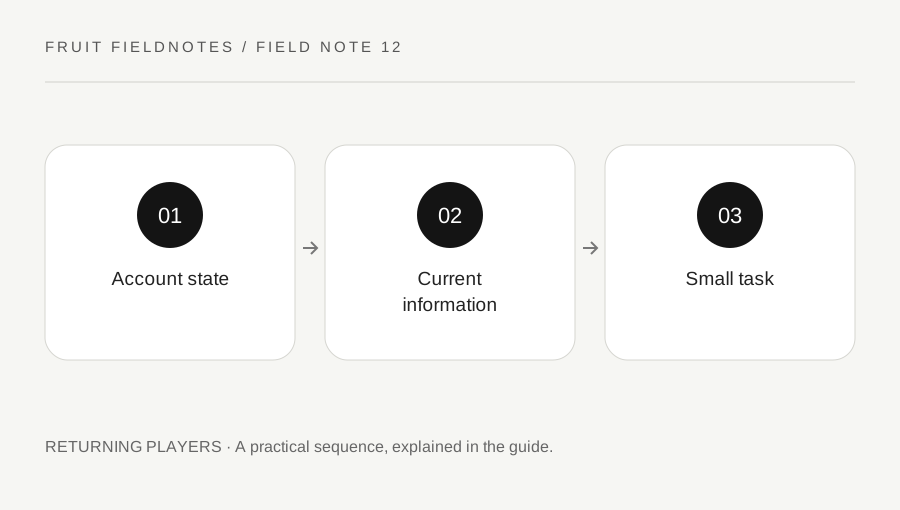
Original explanatory diagram. Examples illustrate a method or decision; they are not claims of personal testing.
Take an inventory of what is actually available
Start by confirming the intended Roblox account and opening the official Blox Fruits experience. Read the current level, sea, equipped items and visible progression state. Do not assume that memory from a previous device or an old screenshot reflects the account now on screen.
Make a short note of the moves you can use and the next unfinished goal you can identify. Avoid changing several pieces of equipment before you have established the baseline. Otherwise, a later difficulty may be caused by a new setup rather than by an update.
For example, you may remember a familiar sequence but find that a move is not available in the current kit. Check the actual equipment and mastery state before concluding it was removed. The first task is to learn what this account can currently do, not to recreate a highlight from the last period when you played regularly.
Check official information for changed assumptions
Use the current experience description and Gamer Robot's dated news to identify relevant changes. Read the date and distinguish an announcement from an old guide. The current world can differ from remembered routes, names or progression ceilings.
As a concrete dated example, the official experience description checked in October 2026 advertises Magnet and Sea 1 changes. That makes a remembered First Sea screenshot something to verify, rather than a permanent navigation authority. This page does not reproduce a fixed level-cap or island-coordinate table that could become stale after another update.
Focus the source check on your intended action. If you plan to travel, confirm current navigation. If you plan to practice a move, inspect its current description. You do not need to understand every historical patch before playing, but you should verify the assumptions that could cause an unnecessary replacement, a long wrong journey or confusion about the next accessible objective.
Choose a small reacquaintance task
Pick one ordinary task that exercises movement, camera control and the kit you already have. A familiar accessible encounter or a short verified trip can reveal what feels different without requiring a major resource commitment. Keep the goal narrow enough to finish and assess.
Observe the actual difficulty. Are inputs unfamiliar, is the camera awkward, or is a target behaving differently from what you remember? These are distinct questions. A returning player can need control practice even when the game system has not changed.
Do not respond to the first awkward encounter by buying a service, sharing the account or downloading an automation tool. Those choices do not diagnose what is unfamiliar. Use supported play, inspect the current controls and practice the specific action that failed. If an actual interface or connection issue appears, record its wording and use the appropriate official help rather than treating every difficulty as proof that progression must be purchased again.
Set the next session from current evidence
After the small task, choose one concrete goal based on what you observed. It might be restoring a comfortable camera setup, learning one changed move or confirming the route to the next available quest. Avoid a long backlog of unrelated goals that competes with basic reorientation.
Update your personal notes with current names and verified landmarks. Mark old notes as historical when they no longer match, rather than deleting useful context without checking it. If sharing a route with a friend, tell them when it was last confirmed.
A good return session ends with an account baseline, a usable sequence and a clear next action. It does not need to reach the newest content immediately. That preparation makes later progression more deliberate and reduces the chance of following a stale guide into an avoidable purchase, replacement or journey. Reorientation is useful work when it converts uncertain memories into current information you can act on confidently in ordinary play.
A practical checklist
Choices are saved in this browser. Reset them here or clear this site’s browser storage.
Questions that come up
Do I need to relearn the entire game before returning?
No. Verify the assumptions relevant to one small task, then expand from current observations.
Does an unfamiliar input prove a move was removed?
No. Check the equipped kit, unlocked moves and controls before attributing the problem to an update.
Should I rely on a remembered First Sea screenshot?
Use it as a historical reference and verify it against the current world, especially after announced changes.
References & scope
Background references checked on 18 October 2026. Worked examples and diagrams are original teaching material.